Seasonal
Mosquitoes, Roadside Ditches and Standing Water
Two problems share one name: the water that produces mosquitoes and the shade the adults rest in. Ignore either one and the…
Read article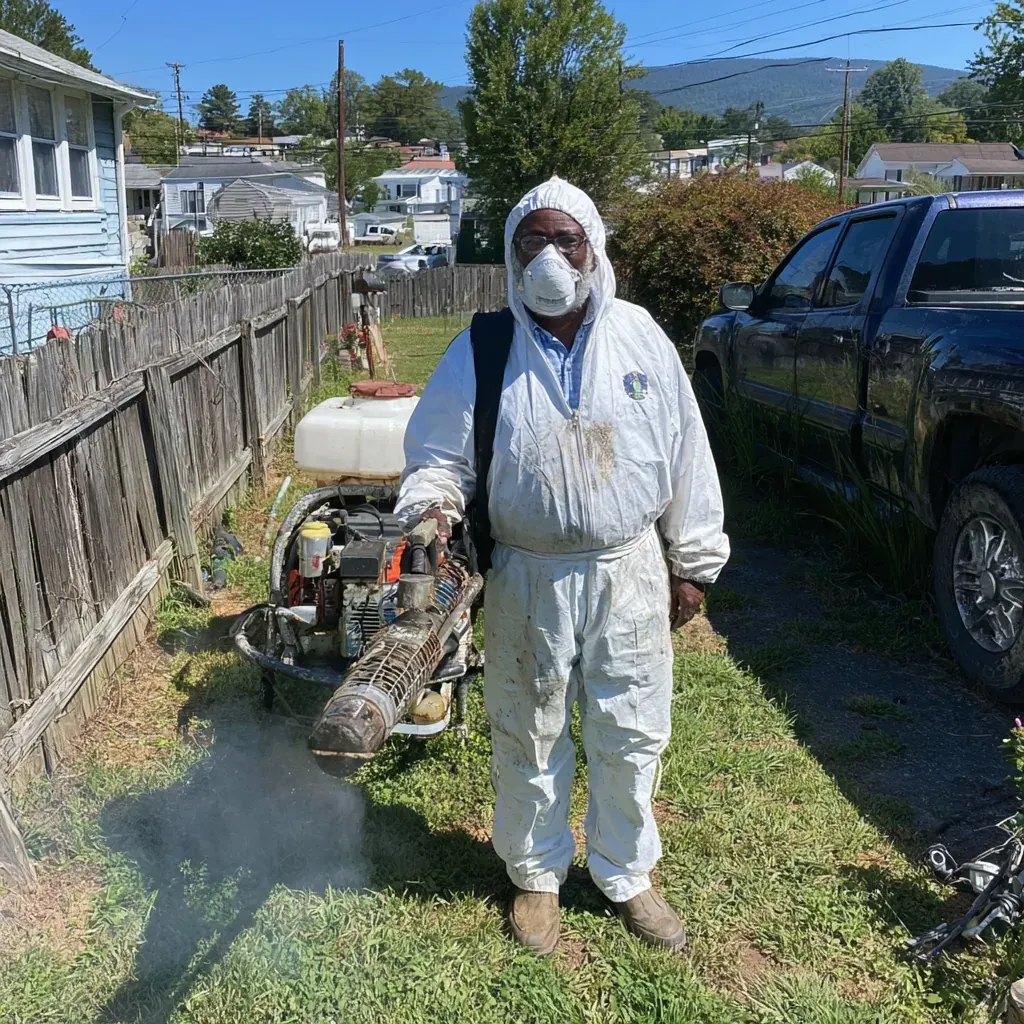
Shaded harborage, standing water, and the pine edge where lone star ticks and chiggers are waiting.
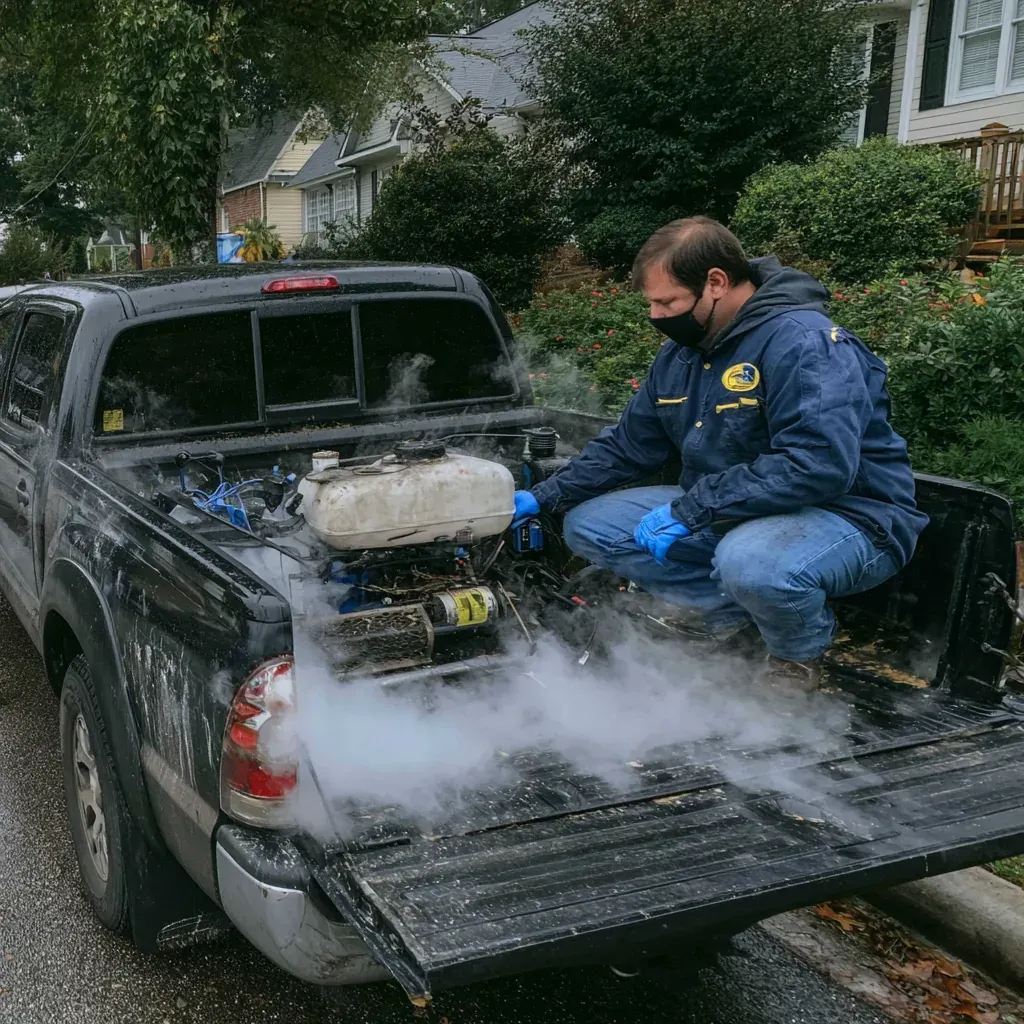
Mosquitoes do not spend the day in open air. They wait it out somewhere cool and still: the underside of ligustrum and azalea leaves, ivy on a fence, the dark side of a shed, a crawl space vent, the shaded strip behind an air conditioner. That is where a treatment has to land. A mist thrown across an open lawn in July reaches almost nothing that matters and is gone with the next thunderstorm. A yard visit worth paying for is slow, kept low to the ground, and spends most of its time in the parts of the property nobody sits in.
The other half of the job costs nothing at all. The striped daytime biters most people here are swatting breed in very little water and close to the house: a saucer under a pot, a corrugated downspout extension, a fold in a tarp, a sandbox lid, a clogged gutter, an old tire behind the shed. Tipping those out on a weekly rhythm removes more mosquitoes than any product does. An honest yard company will also tell you the limit. If the roadside ditch or the creek bottom on the far side of your fence is breeding them, your yard can be treated properly and you will still meet mosquitoes in it.
Fayetteville's yard mosquito problem tracks its low, wet ground: drainage swales, retention ponds behind newer subdivisions, and shaded fence lines where water sits after a thunderstorm. That pattern holds well past the city line — around Eastover, low fields near Little River collect runoff the same way, and Rockfish's ditches along Stewarts Creek and Gully Branch stay damp long after the rain stops. The pros we connect you with will walk your yard for those exact spots before treating a single leaf.
The drive north on US 401 toward Lillington tells the same story from a different angle: Poorhouse Creek keeps the ground soft well past the Harnett County government offices, and standing water in the roadside ditches out that way lingers into evening, prime feeding hours. Closer to Fayetteville, the shaded lots off the Cape Fear River tend to hold that same moisture, so the pros we connect you with check the shade line before they ever load a sprayer.
Whether you're in Fort Bragg, Raeford, Eastover, or elsewhere around Fayetteville, mosquito and tick control has to account for sand that drains fast and then holds damp underneath anyway, plus a warm season long enough that nothing gets a proper reset. That is why this outlasts a straight interior spray.
The treatment is the same either way. The scheduling and the paperwork are not: residential pest control for a home, commercial pest control for anywhere with customers or tenants in it.
Getting bitten in the middle of the afternoon points at the daytime container breeders rather than the evening species. They rarely travel far from where they hatched, so the water feeding them is usually inside your own property line.
Chiggers gather at the edges: pine straw, scrub, tall grass at a wood line. The itching starts hours later, well after you have come inside, which is why the yard rarely gets blamed. Wash up soon after, and see a doctor if a bite looks infected.
Take it off with fine tweezers, gripping close to the skin and pulling steadily. No burning it, no petroleum jelly. Keep it in a sealed bag, note the date, and see a doctor if a rash or a fever follows.
Look at the pot saucers, the ridges of a corrugated drain pipe, the gutter over the porch, the wheelbarrow, the tarp on the boat. A bottle cap of water is enough for a brood, so this is a walk you do rather than a thing you assume.
The survey goes where you would not sit: behind shrubs, along fence bases, under decks, at vent openings. Resting sites and water sources both get written down before anything is mixed.
Material goes onto the undersides of dense foliage, into ground cover and along shaded structure. Blooms get avoided, and open turf gets very little, because that is not where mosquitoes are hiding at noon.
Whatever can be tipped out or drained gets dealt with on the spot. Water that has to stay, like a rain barrel or an ornamental basin, takes a larvicide labeled for it instead of a spray.
Foliage treatments fade under sun and heavy rain, so a working program runs on a cycle of a few weeks with extra attention to the tick edge, rather than one visit in May.
These two are the yard pests where the aim is not comfort alone. Mosquitoes and ticks both bite people and animals, and the sensible goal is fewer encounters rather than a promise of none. Cutting the resting sites, draining the water and keeping the wood line trimmed back changes how often anyone in the household gets bitten, which is a result you can actually notice from the porch.
North Carolina splits this work. Structural pest control in and around a home falls to the NCDA&CS Structural Pest Control Division under the Structural Pest Control Act. Agricultural and general pesticide licensing sits with a separate body, the N.C. Pesticide Board, under the N.C. Pesticide Law of 1971 and administered through the NCDA&CS Pesticide Section. The two are often confused. When a company quotes yard work at a residence, it is fair to ask which one it answers to.
Licenses in this state are issued phase by phase, and the fee structure in N.C.G.S. 106-65.31 shows it plainly: $200 for one phase, $75 for each additional phase and $15 per subphase. So a company holding a license is not automatically covering every kind of work it might offer you. Ask which phases are held for the service being sold.
Plan with these rather than quote from them. For mosquito and tick control, getting at the substructure moves the number further than floor area does, and that is why an honest price does not come down a phone line.
| Which band | What happens | Estimated |
|---|---|---|
| Contained | One live spot, say a run behind a kitchen cabinet or a single mound | an estimated $60–$145 |
| Routine call | Interior placements with the vents, the weep holes and the slab edge | an estimated $70–$210 |
| Bigger job | A bigger property, or something that has had a season to bed itself in | an estimated $105–$335 |
| Staged | Something with a history behind it, so several visits and sealing | an estimated $165–$555 |
None of this is a quote, because too much of it is decided by what is under the floor or behind the slab edge. The Fayetteville pricing guide works through what moves a figure and what comes as standard.
No, and anybody promising it is selling you something. A treated yard has far fewer resting sites and far less breeding water, so bites drop noticeably. Mosquitoes still fly in from beyond the property line, and if there is a ditch, a low creek bottom or a neighbor's untouched pile of containers next door, some pressure is outside anyone's control.
Every three to four weeks through the warm months is the usual rhythm, moved earlier after a stretch of heavy thunderstorms. What sets the interval is weather rather than a calendar rule, so a wet July may need a visit sooner and a dry stretch may hold longer than expected.
On an ordinary residential lot most people land at an estimated $95 to $145 a visit, with a season program working out lower per visit than one-off calls. Acreage, how much dense planting there is and how much water is on the property move the figure. Guide range, not a quote.
Say so before anything is mixed, and point out where the hives, the beds and any wellhead are. Treatment then stays off blooms and off the beds, weighted toward foliage undersides and shaded structure, with timing chosen around foraging. Ask for the product name and the re-entry interval written on your ticket.
Chiggers sit at the boundary between mown yard and rough ground, so the useful moves are keeping the grass short, pulling the pine straw back from paths and treating the edge rather than the middle of the lawn. Personal repellent still matters for anyone working in the scrub.
Usually yes, with expectations set first. You can clear your own resting sites and containers and cut the local population sharply, and you cannot treat somebody else's ditch. Households in that position often get the best result by talking to the neighbors either side and treating the same week.
Use an estimated $69–$139 per treatment as the planning band for mosquito and tick control in Fayetteville. Three things move it: how much area gets treated, how hard the substructure is to reach, and whether the yard needs covering as well as the building. The visit that produces the exact number costs nothing, and nothing is added to it afterwards.
Worth a read if you are still not certain what you are looking at.
Two problems share one name: the water that produces mosquitoes and the shade the adults rest in. Ignore either one and the…
Read article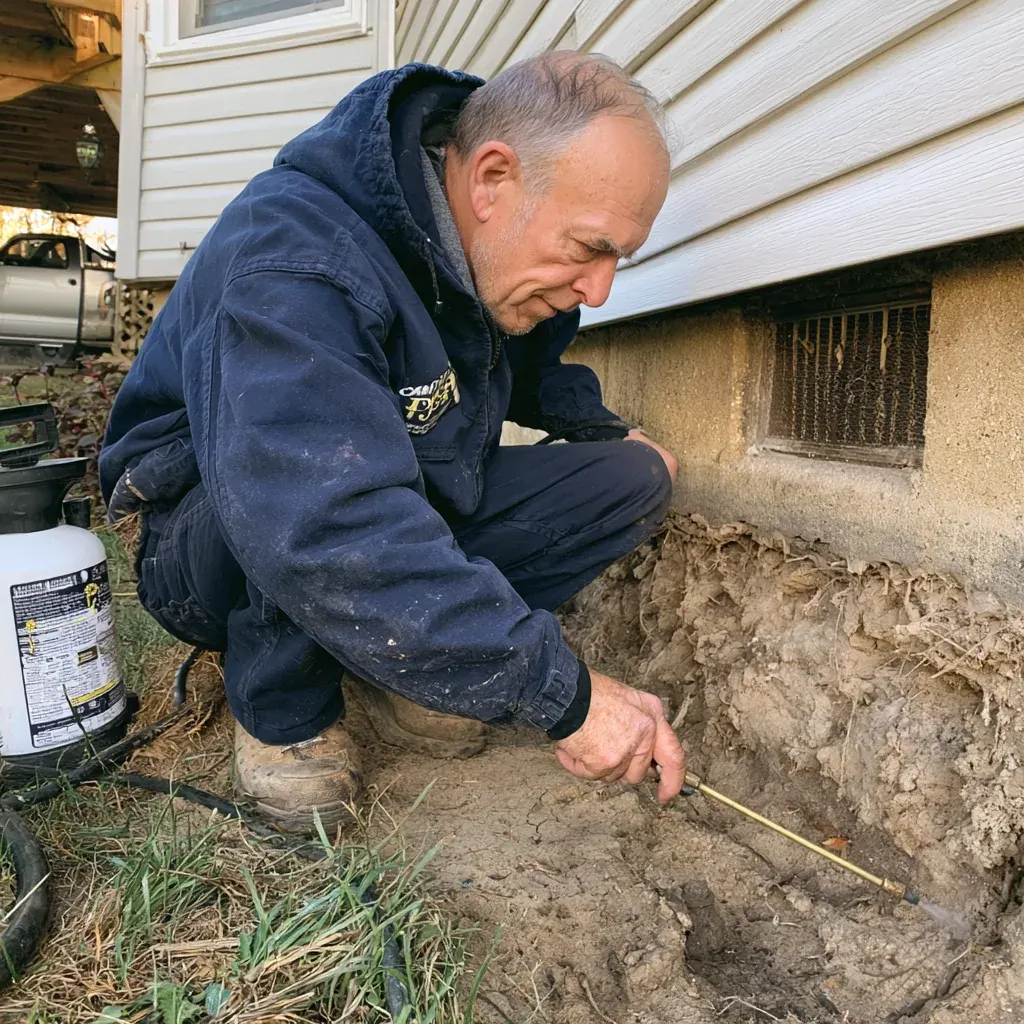
Vents and a hatch, or concrete and a bath trap. Which foundation you have decides how the house gets inspected, treated and…
Read article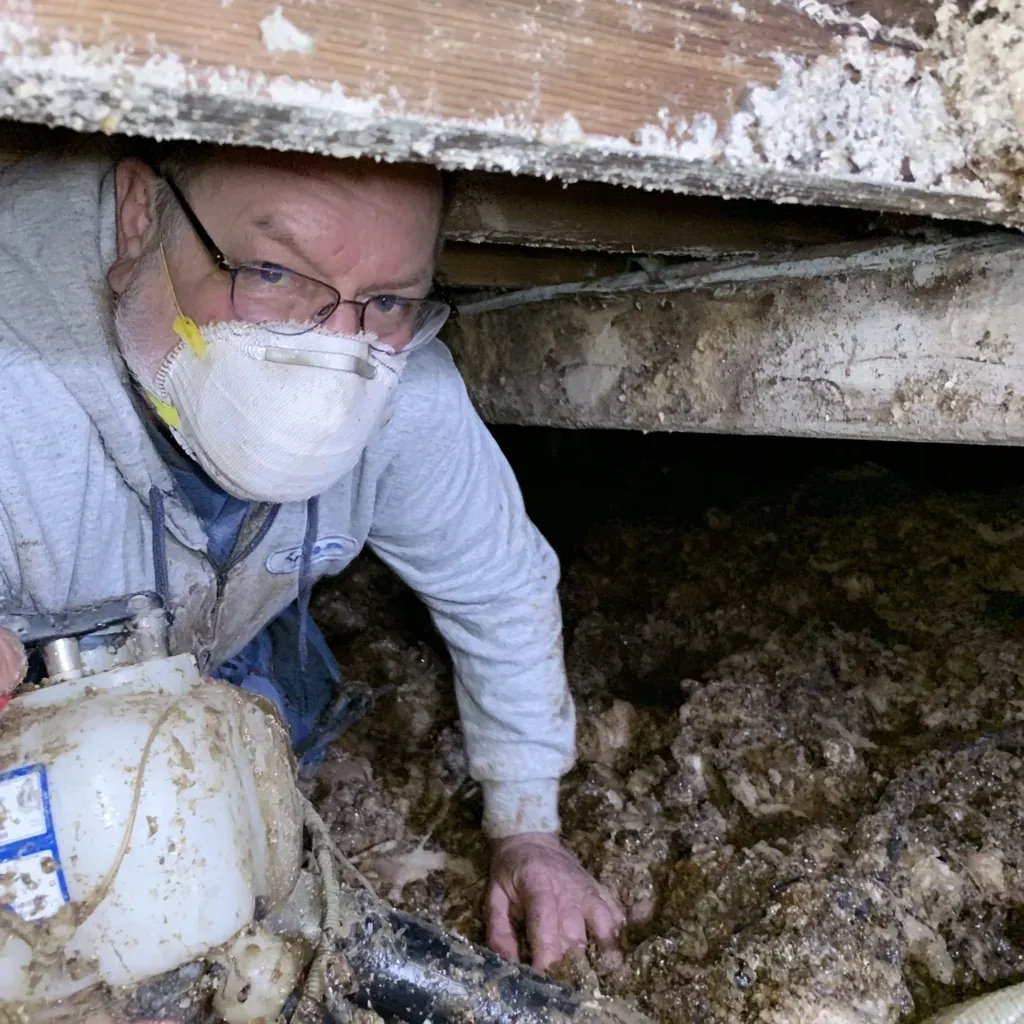
One number on an inspection report tells you more about a crawl space than any photograph. Here is what sits behind it…
Read articleSay what you have seen and roughly where it is. You get a straight read on whether this even needs mosquito and tick control, and a written figure if it does.
Call (855) 563-1479