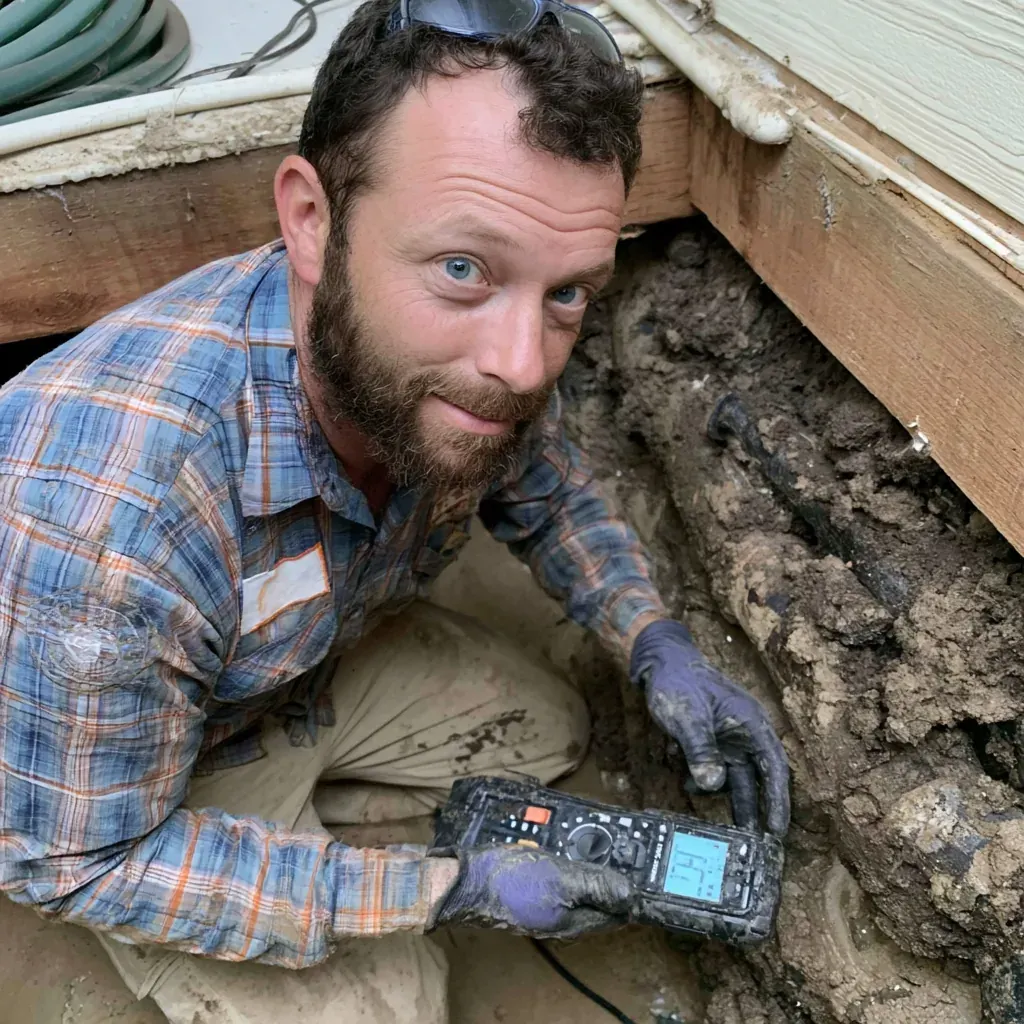
Twenty percent is the number that decides whether a sentence gets written on your inspection report. Wood at a moisture content of twenty percent or greater counts as excessively wet, and excessively wet wood is a reportable condition conducive to subterranean termites in North Carolina. Nobody has to find a live termite for that line to appear. It goes on the form because the conditions are right, and that is genuinely useful information about a house.
What the meter is telling you
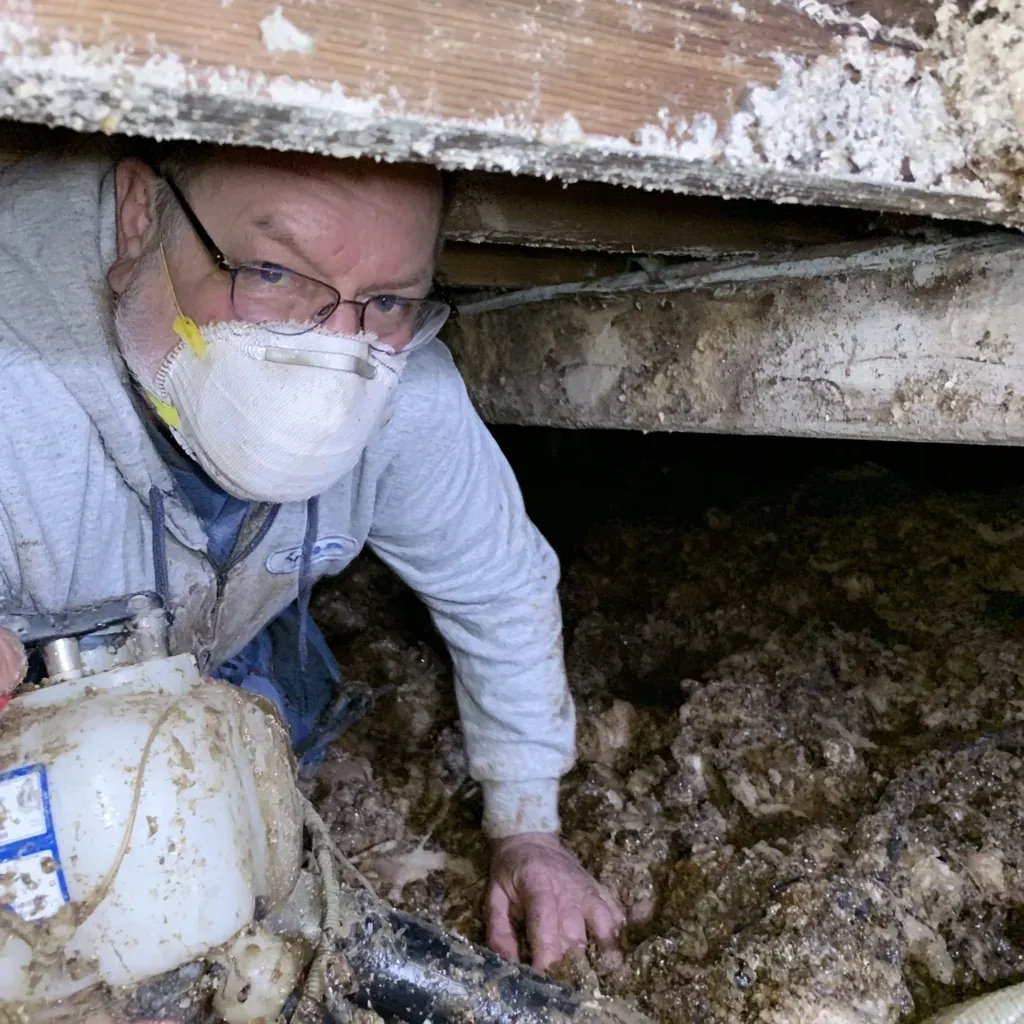
A pin or pinless meter pressed against a floor joist, a sill or a subfloor gives a reading at that spot on that day. One high number after a wet two weeks, in a crawl space with an open vent, is not the same as a whole floor system sitting wet through October. A careful inspector takes several readings, records where they came from, and describes the source rather than handing you a single figure.
The rest of the conducive list
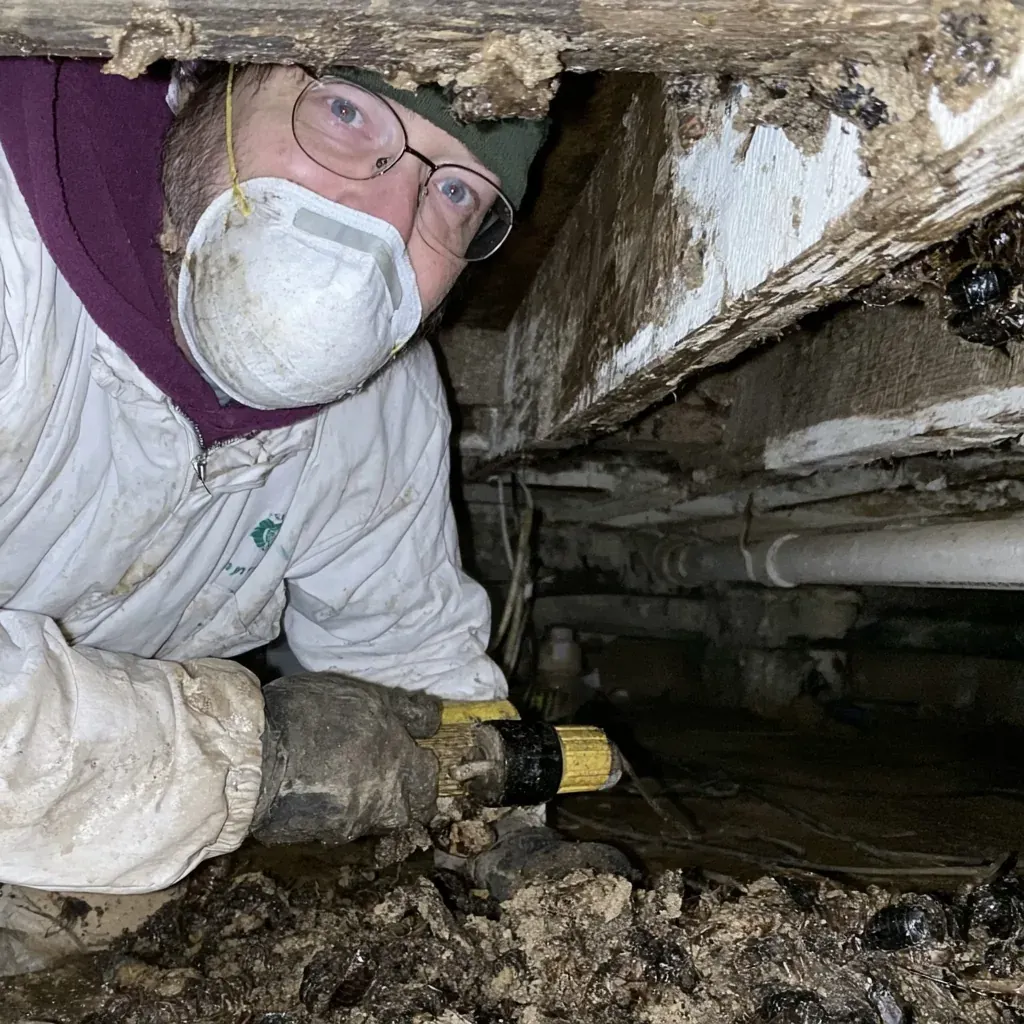
Moisture is one item on it. The others reported include wood in direct contact with soil, cellulose debris left under the structure, insufficient clearance between wood and soil, excessive crawl space moisture in general, construction flaws and improper grading. Wood-decay fungi may be listed as a conducive condition as well.
Read that list again and notice how much of it is housekeeping and drainage rather than construction. Form boards nobody removed, a scrap pile from a bathroom remodel, a flower bed graded back toward the house. Cheap to cause and cheap to undo.
The fixes that move a reading and cost very little
Redirect water first. Extend downspouts well clear of the foundation, clean the gutters, and regrade any bed sloping back toward the wall so water runs away from the structure. A surprising share of high crawl space readings in this county trace to one downspout emptying two feet from a vent.
Then deal with the ground. A continuous vapor barrier over bare soil, lapped and held down properly, stops ground moisture evaporating into the floor system. Clear the cellulose out: scrap lumber, cardboard, old form boards, roots. Make sure vents are open rather than blocked by shrubs or stored items, and that the layout does not leave dead air pockets in the corners.
When the larger jobs earn their keep
This market treats moisture control as a service line of its own, and the ladder runs from poly ground cover through vent work and temperature-controlled vents up to full encapsulation with foam board on the vents and a dehumidifier. Encapsulation solves the problem properly and is priced accordingly. Start at the cheap end, measure again after a few weeks, and only climb if the readings have not come down. Crawl space treatment work locally often starts from an estimated $85, a guide figure and not a quote.
Why the clearance numbers change the reading
State prevention guidance asks for crawl space beams at least eighteen inches above the ground and exterior woodwork a minimum of six inches above grade. Those numbers exist so the space stays inspectable and so wood is not sitting in the damp zone. A joist eight inches above wet sand reads higher than the same joist eighteen inches up, in the same house, on the same afternoon.
Get it in writing, before and after
If a report lists wet wood, ask for the actual readings, the locations, and what the inspector believes the source is. Then ask what the proposed work changes about the source, not only about the wood. Any agreement for work on wood-destroying organisms in this state has to be written down anyway, so there is no reason to settle for a verbal summary of a moisture problem in Stedman, Hope Mills or anywhere else in the county.
Dealing with this in your home?
We offer free inspections and honest recommendations across Fayetteville and the surrounding towns. Call (855) 563-1479 and we’ll help you sort it out.