Homeowner Tips
Bed Bugs at Turnover: A Landlord's Playbook in Fayetteville
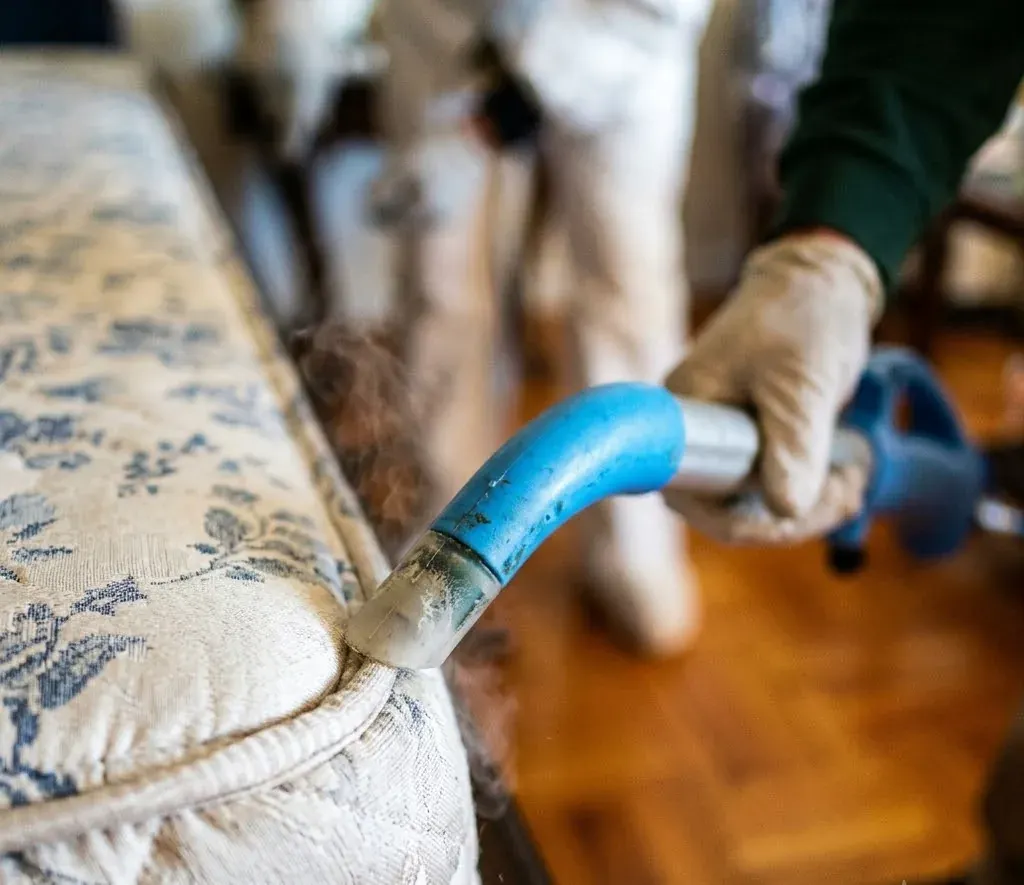
The empty unit between tenants is the cheapest and cleanest time to deal with bed bugs, provided nobody reaches for a fogger…
Read article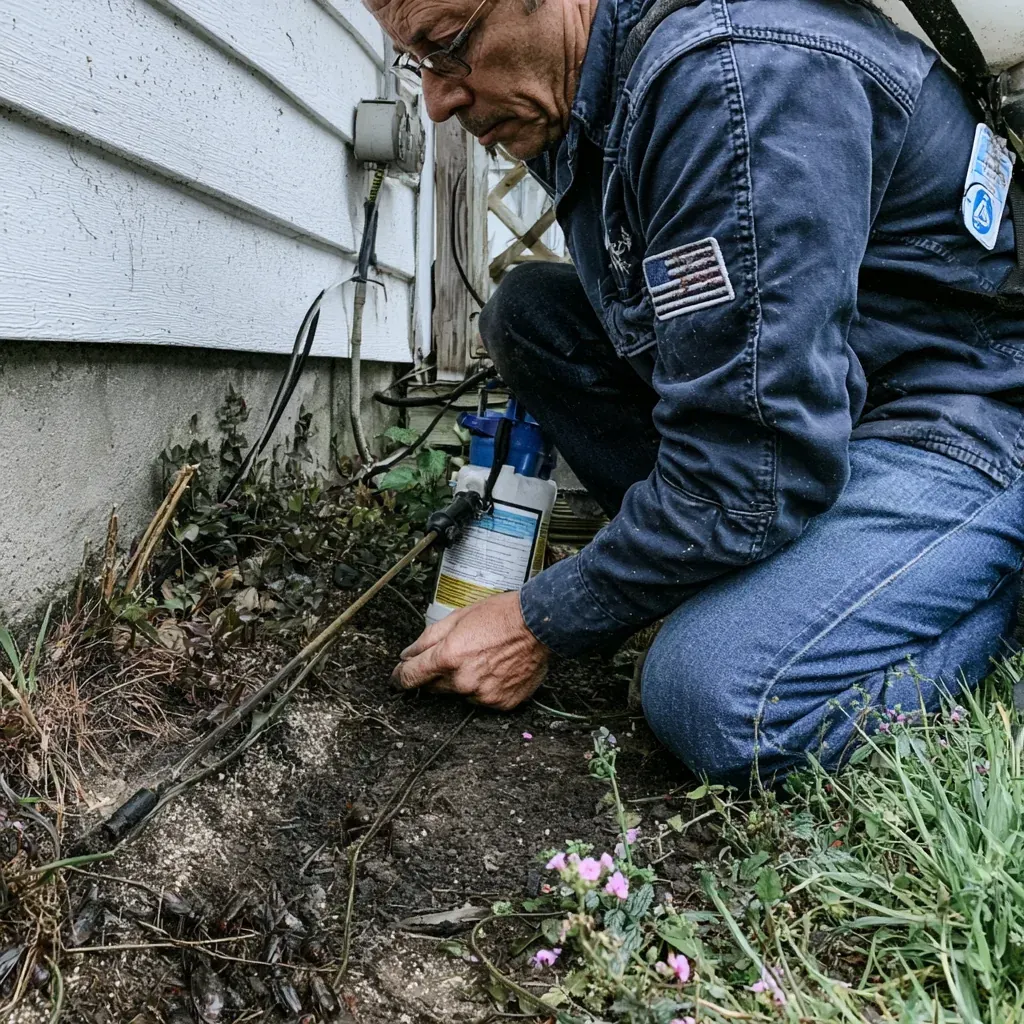
Treat the strip of ground where the wall meets the soil and the inside of the house gets quiet.
Most of the work on a sound pest program happens outdoors, along the narrow strip of ground where the wall meets the soil. That is where ants run their trails, where camel crickets collect under damp pine straw, and where a gap behind a downspout or a settled slab edge becomes a door. Get that line right, keep it dry, and the inside of the house stops asking for much. Sandhills soil drains fast after a storm and then holds damp underneath the mulch, the boards and the bottom course of brick, which is exactly the band nobody looks at.
Indoors the useful work is small and specific. A bait placement inside the sink cabinet, a treated crack behind the dishwasher, a monitor on the garage wall. Fogging a living room is theater. The licensed local pros we connect you with start by walking the foundation, the crawl space vents or the slab perimeter, and the door sweeps, then put material where the insect actually travels rather than where it was last seen. Cumberland County housing splits close to evenly between slab on grade and crawl space, so the entry story changes street by street and the plan should change with it.
Fayetteville's own foundation lines run from downtown slab construction out to crawl-space neighborhoods near Fort Bragg Road, and that split keeps repeating the farther out you go. Head south toward Parkton and the ground turns sandier, pushing crawl spaces up on piers where moisture and access gaps multiply. Out toward St. Pauls near I-95 at Exit 33, older homes along Broad Street show the same pattern, which is why the plan has to match the ground, not just the address.
East of Fayetteville, Vander sits on the kind of open, flat ground that lets clay soil hold water right against a slab, while Gray's Creek along NC 87 mixes older pier-and-beam homes with newer construction near Gray's Creek Elementary School and Gray's Creek Middle School, each with its own gap between the framing and the dirt. Farther out, Lillington and the Harnett County government offices sit on higher, better-drained ground, which is exactly why the licensed pros we connect you with inspect the foundation itself before naming a treatment.
Foundations shift with the soil underneath them, and that varies more across this area than most homeowners assume. Out toward Godwin, along Dunn Road near Interstate 95 at Exit 65, older slab work sits differently than the crawl spaces common closer to Wade and Old Bluff Presbyterian Church, and each style opens its own paths for pests. The same logic carries out to Linden and Ellerslie, where the pros we connect you with check the sill plate and grade before ever proposing a fix in Fayetteville.
Whether you're in Hope Mills, Spring Lake, Fort Bragg, or elsewhere around Fayetteville, general pest control has to account for sand that drains fast and then holds damp underneath anyway, plus a warm season long enough that nothing gets a proper reset. That is why this outlasts a straight interior spray.
The bulk of this is private houses, and residential pest control sets out what a visit involves. Tenanted stock, shops and anything trading sits on commercial pest control.
One or two ants inside is traffic. A line of them following the same route along the foundation means a colony has found a food source and a way in, usually within a few feet of where the trail disappears.
American cockroaches live outside in mulch, sewer lines and crawl spaces, then push indoors when a summer thunderstorm floods what they were living in. Repeated sightings in a garage or utility room point at the perimeter, not the kitchen.
If you can see light at the threshold, an insect can walk through it. Worn sweeps and a missing corner of weatherstripping account for a surprising share of what gets treated indoors.
Millipedes, sowbugs and crickets follow moisture. A concentration on one wall usually traces back to a splash zone, a leaking spigot or grading that sends water toward the house instead of away.
The inspection starts at the foundation and works around the structure: vents, slab edge, utility penetrations, spigots, mulch depth, downspout discharge. What is found there sets the whole plan.
A band along the foundation, eaves and soffit lines cleared of nests, and the obvious gaps closed. Sealing a gap outlasts anything sprayed over it.
Baits and crack treatments go in the cabinets, voids and utility chases where the activity is. Open floors and countertops are left alone.
You get a record of what was applied and where, plus what you should change: a sweep, a grade, a woodpile off the wall. Follow-up timing depends on the pest, not on a calendar.
A perimeter that is treated and dry does two jobs at once. It cuts the number of insects that ever reach the wall, and it removes the damp, cellulose-rich conditions that also invite termites and wood-decay fungi. That is why a general service is worth doing properly rather than as a spray around the kitchen: the same neglected band of soil feeds the small problems and the expensive one.
Structural pest control in a home falls to the NCDA&CS Structural Pest Control Division, which enforces the Structural Pest Control Act, N.C.G.S. Chapter 106, Article 4C, and the Structural Pest Control Rules at 02 NCAC 34. Licenses are issued by phase, so it is fair to ask which phase covers the work being proposed at your house.
Under the Residential Rental Agreements Act, G.S. 42-42 requires a landlord to make repairs and do what is necessary to keep a rental fit and habitable, and that duty runs the whole tenancy rather than ending at move-in. It cannot be waived. Who pays for a given pest treatment still turns on the lease and the cause, so report the problem in writing, keep your copy, and keep paying rent.
Where general pest control tends to land locally. How far it has traveled, and whether the house is a slab or a raised floor, account for most of the spread.
| Stage | Work in it | Band |
|---|---|---|
| Early | Caught early enough that it is still in the place it started | an estimated $75–$250 |
| Typical | The full visit: perimeter soil, vents or slab line, and the pipe collars | an estimated $90–$360 |
| Heavier | More building to cover, an addition on the back, or two separate outbreaks | an estimated $135–$575 |
| Long established | Left long enough that it needs repeat visits and exclusion work | an estimated $215–$955 |
Across a year a schedule works out lower per visit than three separate call-backs, and the pricing guide sets the two next to each other with every extra priced.
Usually less than people expect. A first visit often includes some interior placement in the kitchen, baths and garage, and after that the exterior does the heavy lifting. If a company wants to spray your whole interior every visit, ask what that is achieving.
Trailing ants often thin out within a few days as bait moves back through the colony. Roaches and crickets coming in from outside can take a couple of weeks to drop off, because you are waiting on the outdoor population as well as the ones already inside.
It changes where the attention goes. Slab homes get entry at plumbing penetrations, the bath trap and construction joints, and where the slab has shrunk back from the foundation wall. Crawl space homes get it at vents, piers and the sill. Concrete slab resting on the soil is one of the most common construction types in North Carolina, so both are routine here.
Materials are chosen and placed with that in mind, which is another reason targeted placement beats broadcast spraying. Ask for the product label and the re-entry guidance for anything applied indoors, and follow the drying times you are given.
For a typical single-family home in the Fayetteville area an initial service is often an estimated $89 to $239, with the scheduled visits after it lower. That is a guide figure rather than a quote, and treated footprint, how easily the substructure can be reached and how long the problem has been running all move it.
Not for a normal service. Clear the area under the sink and pull items away from the wall in the pantry if you can. A full kitchen empty-out belongs to a heavy roach cleanout, not routine work.
Budget an estimated $89–$239 per treatment for general pest control across Cumberland County. A long single story on a wide Sandhills lot has more footing to band and sits near the top. A compact in-town property with one contained problem sits near the bottom. No charge for the visit, and you sign off the written figure before work starts.
The long version, for anyone who would rather understand it before booking anything.
The empty unit between tenants is the cheapest and cleanest time to deal with bed bugs, provided nobody reaches for a fogger…
Read article
Search results hand you ads. These are the questions to ask before you book, the red flags, and the six items North…
Read article
What actually moves a pest control price around here, with hedged ranges and the one charge people forget to ask about separately.
Read articleSame day where the diary allows, and a real arrival window when you book. We run Fayetteville and out across Cumberland County.
Call (855) 563-1479