General Pest Control
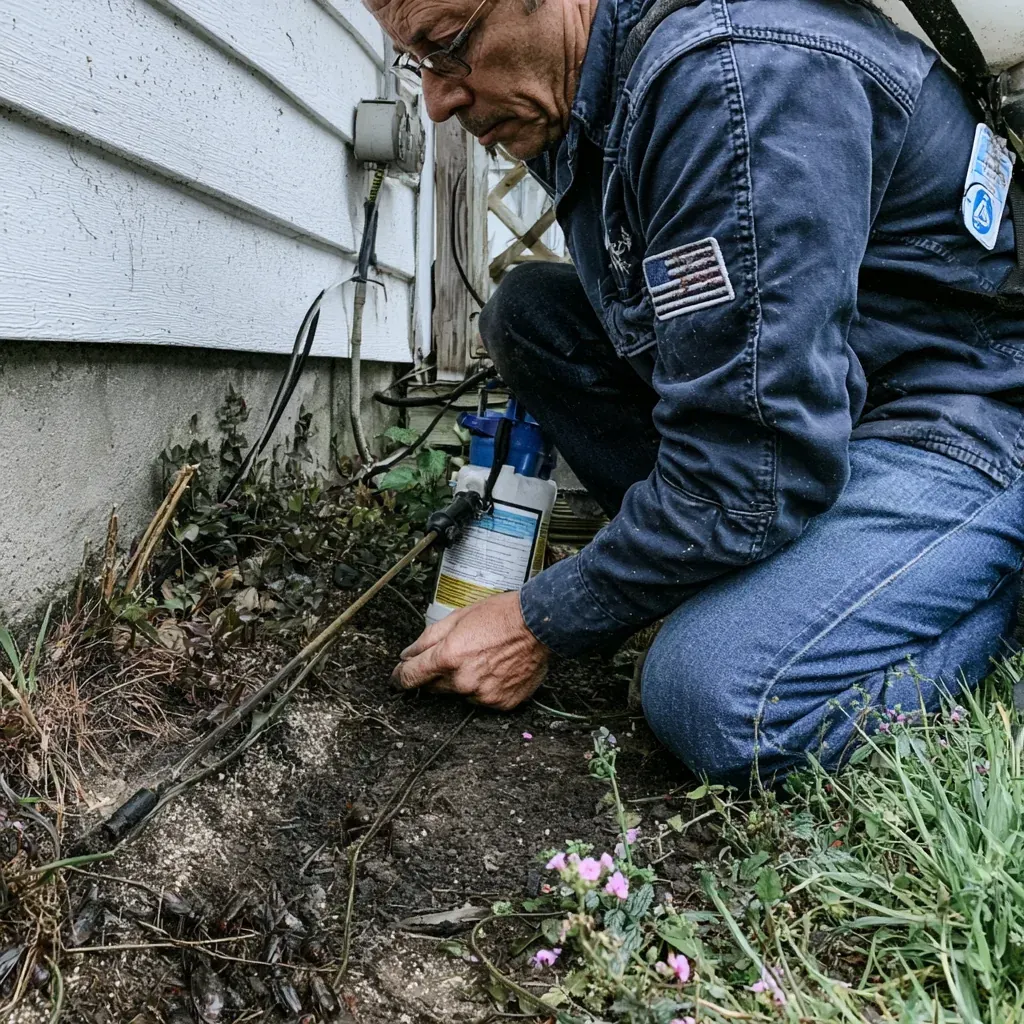
Treat the strip of ground where the wall meets the soil and the inside of the house gets quiet.
Learn about General Pest Control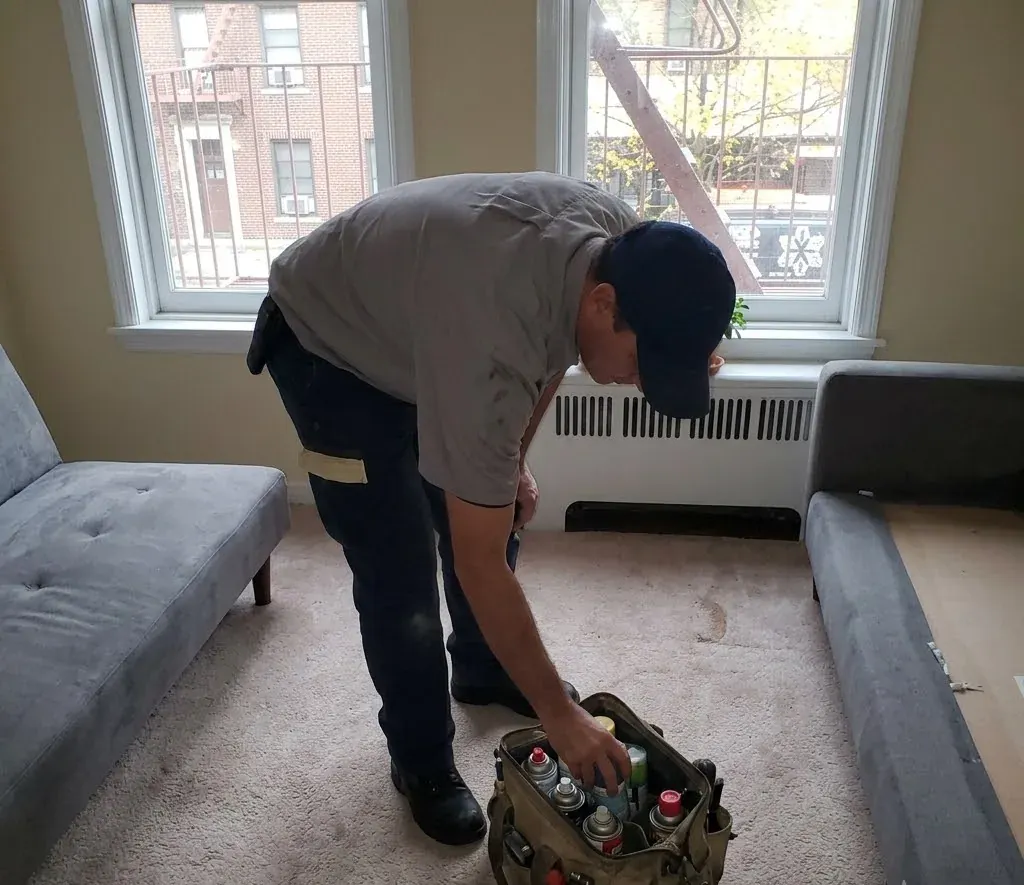
Under the floor, along the slab line, and out across the yard. Termites, roaches, fire ants and mosquitoes dealt with where they actually live.
Three things push on a Fayetteville house at the same time, and they do not arrive together or in any order you can plan around. There is the soil under the foundation, where at least three native species of subterranean termite are working and swarming from late winter through to September or October. There is water, which the Sandhills handles strangely: sand at the surface drains almost as fast as you can pour onto it, then the ground a foot down stays damp for weeks. And there is whatever the last storm pushed out of the pines and the low ground looking for somewhere dry. Cover a home properly and all three get an answer, which is why the roaches stop coming under the door, the mounds stop reappearing in the grass, and the floor framing stays part of the house rather than part of a colony's diet.
The licensed local pros we connect you with read the foundation before quoting anything. On a crawl space that means clearance, the condition of the vapor barrier, wood moisture at the sill, damp soil against a footing, torn vent screens and open pipe collars. On a slab it means the bath trap, the plumbing penetrations and where the slab has shrunk away from the wall. None of it is visible from the driveway, and at 20 percent wood moisture or above North Carolina treats it as a reportable condition conducive to termites. Findings and a written figure come first, then treatment goes to the soil, the perimeter, the voids and the turf, anywhere in Cumberland County.
Rolling year-round plans, single jobs where a problem really is contained, and the seasonal work that has to be timed to the wet months around Fayetteville.
Treat the strip of ground where the wall meets the soil and the inside of the house gets quiet.
Learn about General Pest Control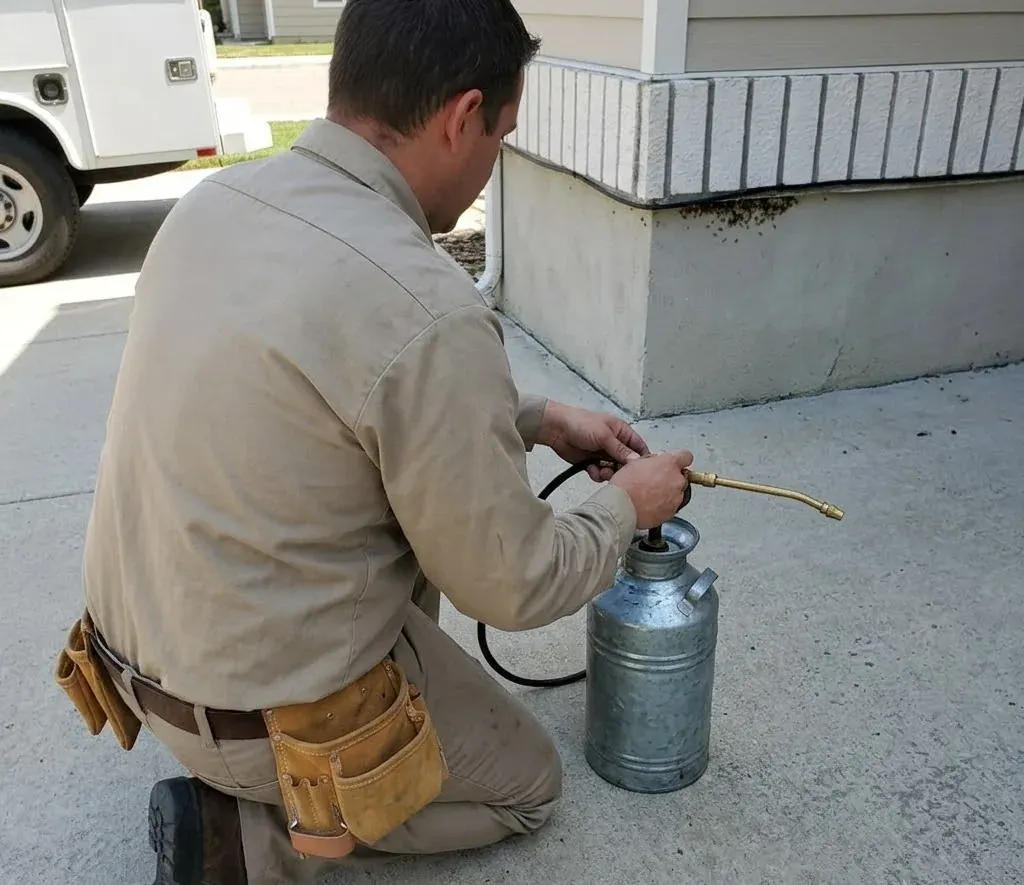
Nothing applied to the outside of a house here lasts twelve months. That is the whole argument.
Learn about Quarterly Pest Protection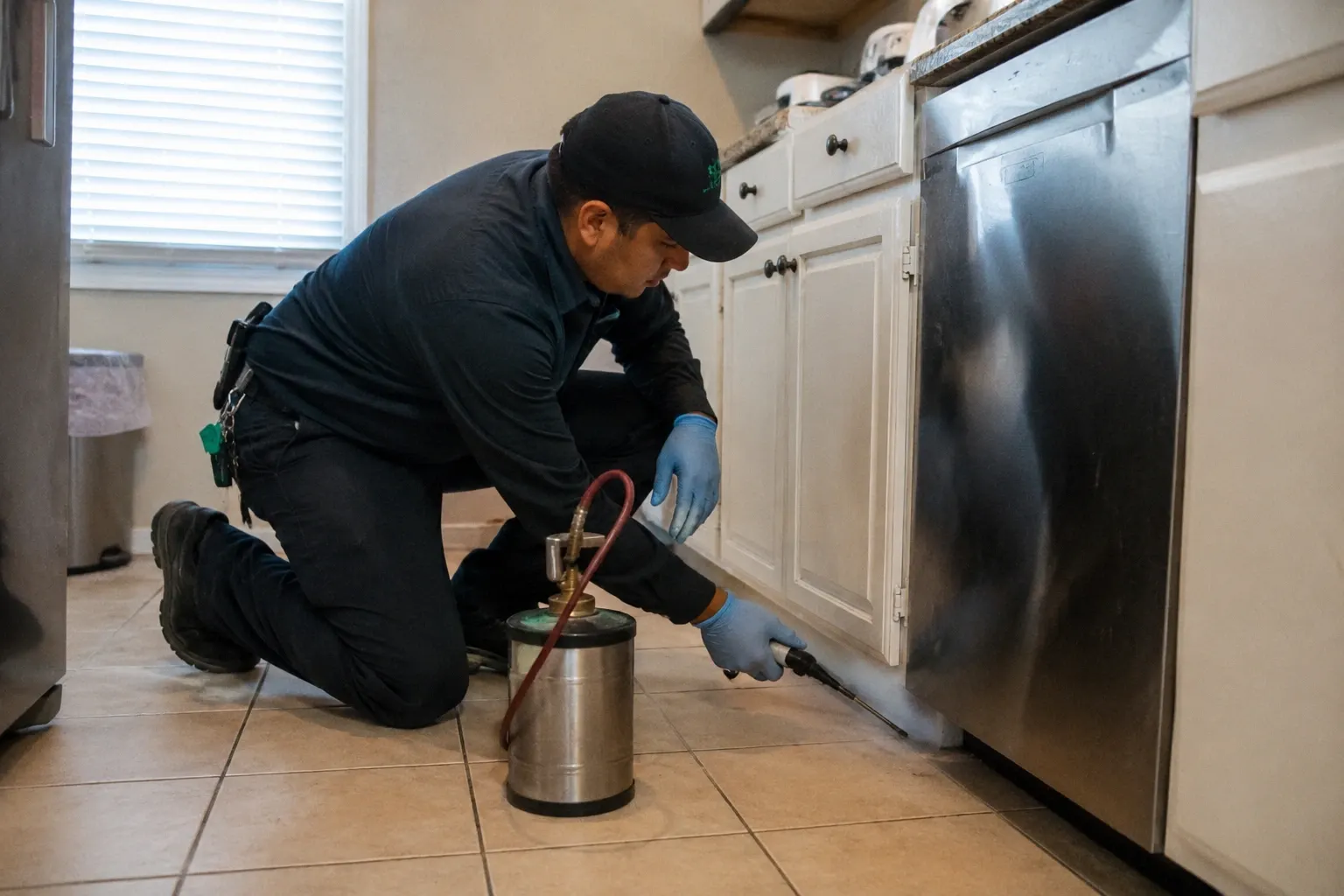
Some problems end with one appointment. Some do not, and you deserve to hear which is which.
Learn about One-Time Pest Treatment
A method, not a bottle. Seal it, bait it, place it precisely, and use the least that works.
Learn about Eco-Friendly Pest ControlIt starts underneath. On a raised floor that is clearance, the ground line, the vapor barrier and the sill, with a moisture meter rather than a guess, because North Carolina treats wood at 20 percent or above as a condition conducive to termites. On a slab it is the bath trap, the pipe penetrations and the joint where the slab has shrunk off the wall. Treatment then goes where the population lives: soil against the footing, weep holes and vents, pipe collars, wall voids, turf and the tree line. Indoors, product is placed at live areas instead of being sprayed through the house.
Yes, and less of the result comes from product than people expect. Closing openings and drying out the space under the floor does the heavy lifting. What is applied goes into runs, voids and mound sites rather than across surfaces anybody touches. If a room or an area needs an hour clear, you are told at the door and it goes on the ticket in writing.
Most Fayetteville homes end up on a rolling schedule, with the mosquito and mound work timed to the wet months and the termite side treated as an annual inspection rather than a repeat spray. A genuinely contained problem can be one visit and nothing more, and you will be told if that is what you have rather than sold a plan for it. Nothing carries a term either way. If the house is a recent build, one extra question is worth asking: whether a Sub-Slab Treatment Release Form was ever signed, because that form exists to record which areas under a slab were poured without the required soil treatment, and only the property owner should have signed it.
Nearly always, and for one specific reason: termites are the only thing on this list eating the building rather than irritating you, and that damage is excluded from your homeowners policy as gradual loss. So the agreement is not an upsell, it is the document filling a hole the policy leaves open. Which agreement matters more than whether you have one. Re-treatment only buys another treatment and nothing else, and it is the most common form in the trade. Re-treatment plus damage repair puts right new damage up to a stated amount, and not every company sells it. A third kind carries no warranty at all, which by law has to be stated clearly in the agreement. Bring out whatever you already hold and we will read it with you before you renew it.
Most people pay an estimated $89–$239 per treatment for residential pest control around here. The reason timing matters so much locally is that the season barely closes: swarming runs from late winter into September or October, so something that has been going for months takes more work to put down than something spotted in week one. The figure follows the free inspection and is never quoted firm over a phone.
Free inspection across Fayetteville and the towns around it, with photos, findings and a written figure before any work begins.
Call (855) 563-1479