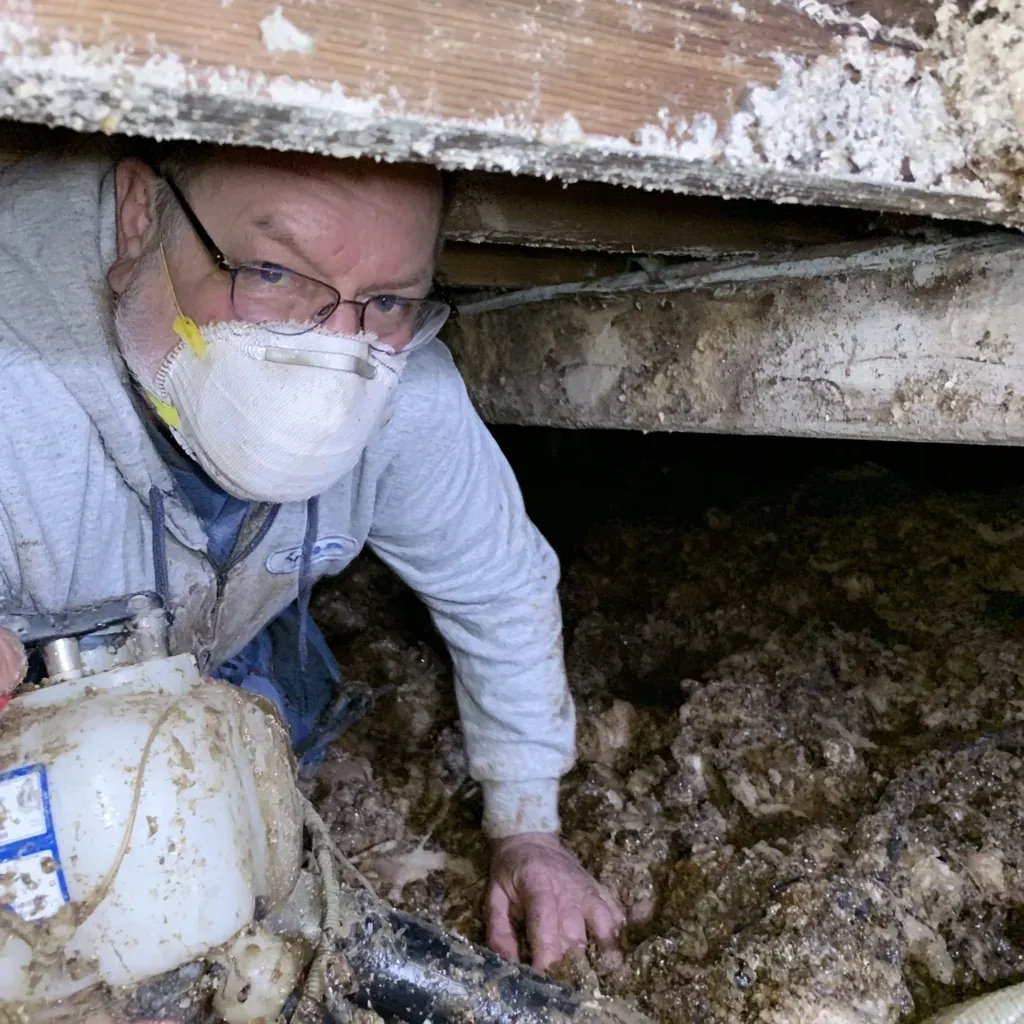
Homeowner Tips
The 20 Percent Wood Moisture Rule Explained
One number on an inspection report tells you more about a crawl space than any photograph. Here is what sits behind it…
Read article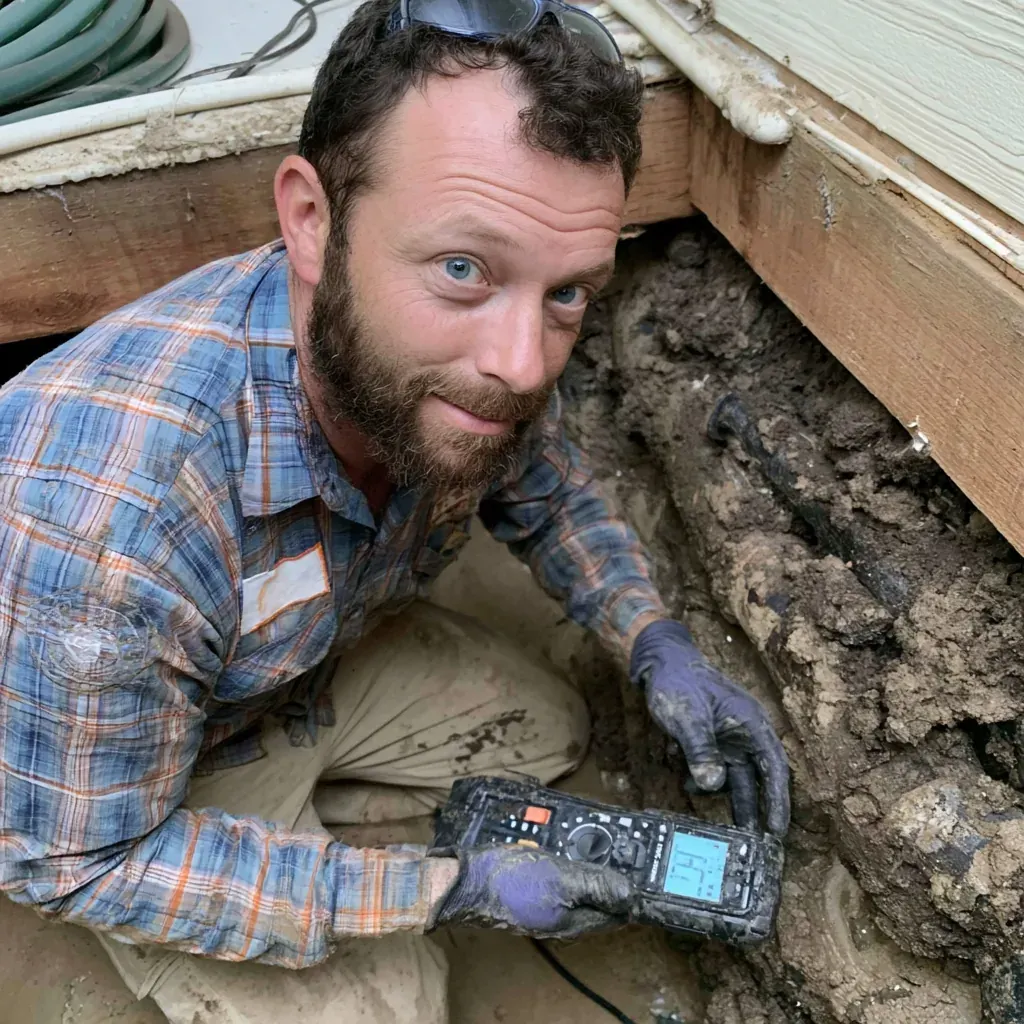
Dry wood is the cheapest termite deterrent there is, and the one nobody sells you.
Twenty percent is the figure to remember. Excessively wet wood, meaning a moisture content of 20 percent or greater, is one of the conditions conducive to subterranean termites that has to be reported on North Carolina's official wood-destroying insect report. So does wood in direct contact with soil, cellulose debris under the structure, insufficient clearance between wood and soil, excessive crawl space moisture, construction flaws and improper grading. That list is not a pest company's opinion. It is what a licensed inspector is obliged to write down, and it is why a wet crawl space turns up as a note on a report during a sale, long before anything has eaten a joist.
The moisture arrives here in a specific way. Sandhills soil takes a summer downpour quickly, which looks like good drainage from the driveway, and then holds the damp underneath where the sun never reaches. A crawl space with bare dirt sits over that reservoir and gives it up into the air, into the joists and into the subfloor all season. Add a downspout discharging beside the foundation, a grade that slopes back toward the house, and vents that were designed for a different assumption about humidity, and you have a structure that stays at inspection-failing moisture through most of the year.
Fayetteville homes carry that same twenty-percent risk unevenly across the map. A crawl space in Haymount, tucked into the hillside grade near Arsenal Avenue and Cross Creek, holds moisture differently than a slab off toward Hope Mills, where the ground sits low near Hope Mills Lake and the dam. Out along NC 87 near Gray's Creek Elementary and Gray's Creek Middle School, sandier soil drains faster but heavy downspout discharge still pools where it shouldn't. The licensed pros we connect you with test the number, not the guess.
Farther out, the drive to Elizabethtown along NC 87 passes Tory Hole Park and Bladen Lakes State Forest, where dense timber edges and low, damp ground push termite pressure hard against foundations. Clinton's Sampson Community College and the government offices near the Clinton Depot sit on similarly moisture-heavy clay, a full county away from Fayetteville. The twenty percent figure holds across all of it, since moisture content, not distance from town, decides where colonies actually feed.
Sandy loam near Wade drains fast along US 301, while low ground toward Erwin and the Cape Fear River holds water long after a storm passes, and both extremes point back to the same twenty percent threshold rather than the map between them. Lumberton's flood-prone stretches near the Lumber River make the same case from the opposite side of the county. The pros we connect Fayetteville homeowners with test the wood itself, not the neighborhood's reputation for being dry or damp.
Whether you're in Elizabethtown, Lillington, Vander, or elsewhere around Fayetteville, moisture control has to account for sand that drains fast and then holds damp underneath anyway, plus a warm season long enough that nothing gets a proper reset. That is why this outlasts a straight interior spray.
Houses account for most of it, under residential pest control. Offices, restaurants and rental stock go through commercial pest control, usually while the doors are shut.
That is the threshold at which wood is recorded as excessively wet on the official report. It is measurable, so it is worth asking for the actual readings and where in the crawl space they were taken.
Uncovered dirt releases moisture into the crawl space continuously. A sealed polyethylene ground cover is the single change that moves the most water out of the equation for the least money.
White or dark patches and a musty odor in the crawl space point at sustained high humidity. Wood-decay fungi can themselves be listed as a condition conducive to termites.
Water lying in the crawl space for days after rain is a grading and drainage problem, not a ventilation problem, and treating the insects it produces will not change it.
Wood moisture readings at several points, relative humidity in the space, and a look at where water is entering. Numbers first, because they decide whether this is a ground cover job or a drainage job.
Polyethylene sheeting laid across the soil, run up to the piers and foundation walls, with the overlaps sealed rather than left loose. A partial cover leaves the wettest corner doing what it always did.
Downspout extensions, grading corrections that move water away from the foundation, and any plumbing leak fixed. Ventilation cannot dry a crawl space that is being refilled from outside.
Vent work is decided after the water is handled. Options here include additional vents, temperature-controlled vents, or closing the vents as part of a sealed system with a dehumidifier. All three are legitimate, for different crawl spaces.
This sits with a pest company because the state's own conducive-conditions list is a moisture list. Damp wood, soil contact, debris, poor clearance and bad grading are what draw subterranean termites and feed wood-decay fungi, and they are the notes that show up on a report during a sale. Fixing them is cheaper than treating what arrives afterward, and unlike a treatment, dry wood does not need renewing every year.
Conditions conducive to subterranean termites have to be reported on Form No. WDIR 100. The minimum list is wood in direct soil contact, cellulose debris under the structure, and excessively wet wood at a moisture content of 20 percent or greater. Wood-decay fungi may be listed as conducive, along with insufficient clearance between wood and soil, excessive crawl space moisture, construction flaws and improper grading. Every one of those is a moisture or housekeeping item, which is why they are fixable before a sale.
NCDA&CS states plainly that most North Carolina homes over 10 to 15 years old will show some evidence of wood-destroying insects, and that a clear report is neither to be sought nor required in order to close. The report is not a warranty, it does not clear a structure, and issuing a later no-evidence report after evidence was found breaks the rules. Read the conditions on the reverse and get the report early in the transaction.
Working figures for moisture control across this end of Cumberland County. Nothing is charged for the look, and you hear the number before anybody starts.
| Scope | What is in it | Figure |
|---|---|---|
| One area only | A single active patch, dealt with exactly where it sits | an estimated $225–$865 |
| Whole house | Indoors, plus a band of treated soil along the whole footing | an estimated $265–$1240 |
| Wider footprint | A long single story, a wide slab, or sightings in several rooms at once | an estimated $400–$1980 |
| Dug in | Heavy activity, taken in stages with every route in closed off | an estimated $635–$3300 |
Screening and debris removal get their own line, because burying them is how a quote quietly grows on you. The pricing guide has all of it, including where a policy will and will not help.
Because that is where wood is classified as excessively wet and becomes a reportable condition conducive to subterranean termites on North Carolina's official report. It is a bright line on a document a buyer's lender will read, which makes it a number worth managing rather than arguing about.
It depends on the crawl space and it is decided after the water is dealt with. Some spaces do well with more airflow or temperature-controlled vents. Others do better sealed with a dehumidifier, because on a humid Sandhills afternoon an open vent can bring in air that condenses on cool joists. Anyone who answers this without going under the house first is guessing.
Often it is the biggest single improvement, especially where the soil was bare. It stops being enough when water is entering from outside, when a plumbing leak is running, or when the space has no path for humid air to leave.
The overlap is the point. Moisture is the condition that produces termites, wood-decay fungi, crickets and roaches under a house, and it is a pest inspector who has to record it. Whoever does the work, it belongs in the same conversation as the termite plan.
No. Drying stops the process and protects what is sound. Rotted or infested framing is a repair question, and it is worth knowing that the official wood-destroying insect report is not a structural damage report and does not reveal wood-decay fungi damage.
A crawl space treatment as part of a service is often an estimated $85 to $150, while ground cover, vent work and drainage corrections are priced on the square footage and what has to be moved to reach it. Guide figures only, since crawl space height and access change the labor more than anything else.
A planning figure, not a quote: moisture control in the Fayetteville area normally comes to an estimated $265–$825 per treatment. Where you land is set by treated area, whether the house sits on a poured slab or over a crawl space, and how much of the structure is already involved. The look is free, the number is written down before anything is opened, and our bands sit slightly under what the companies here publish.
Fuller pieces on telling one species from another, and on when in the year it matters.
One number on an inspection report tells you more about a crawl space than any photograph. Here is what sits behind it…
Read article
Search results hand you ads. These are the questions to ask before you book, the red flags, and the six items North…
Read article
What actually moves a pest control price around here, with hedged ranges and the one charge people forget to ask about separately.
Read articleSame day where the diary allows, and a real arrival window when you book. We run Fayetteville and out across Cumberland County.
Call (855) 563-1479